Summer is in full swing, and you may already be enjoying your holidays by the pool. Now is the perfect time to refresh your memory on the essential safety rules and check that your safety equipment is still suitable and in good working condition. After a review of the key precautions to keep in mind, discover our selection of recommended safety devices to help you enjoy swimming with complete peace of mind.
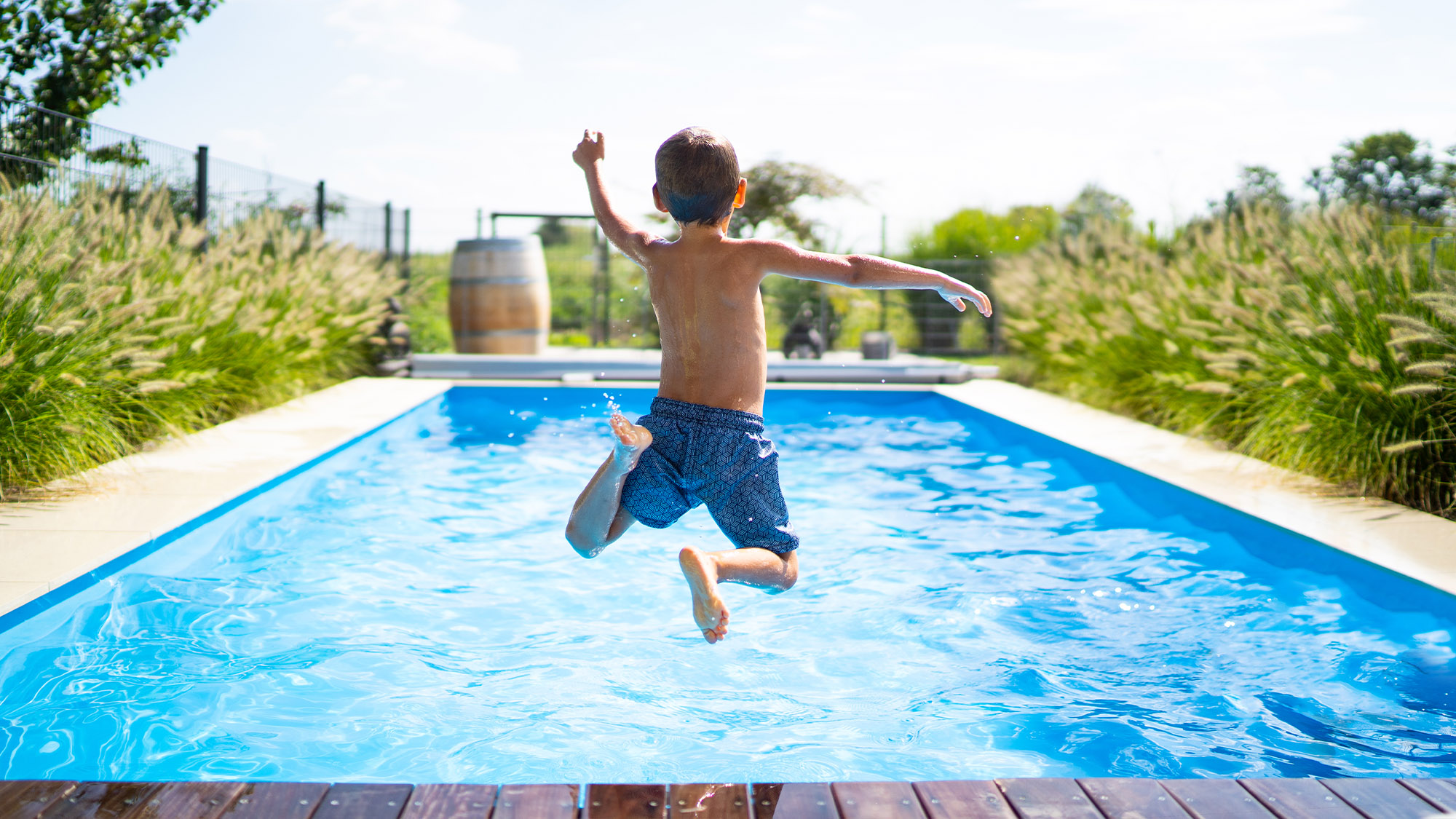
Review of good prevention advice
- Teach your children to always ask permission to go near the swimming pool.
- Do not leave your children unsupervised by the water.
- Ensure that every member of the family learns to swim.
- Always have a telephone to hand and remember the number 112 to call the emergency services (the number is the same throughout Europe).
- At a public swimming pool, read the safety instructions together. This isn’t much fun, but it helps them to understand that there are rules.
- To avoid hypothermia, it is recommended to bathe two or three hours after meals and to adapt your bodies to the water temperature by wetting the back of your neck and your forearms.
- Cover your children with waterproof sunscreen every two hours. There are also anti-UV t-shirts, designed for swimming. Above all, stay in the shade between 10.00 am and 4.00 pm!
- For young children and inexperienced swimmers, use appropriate flotation devices that comply with safety standards. However, these devices should never replace adult supervision. (source: Preventing Drowning | Drowning Prevention | CDC)
- Drink water regularly, even if you aren’t thirsty. Avoid drinks containing alcohol or caffeine.
- A good shower is recommended after swimming to rinse off chlorine.
What to do to prevent drowning
According to Eurostat, 4,810 deaths from accidental drowning and submersion were recorded in the European Union in 2022, representing a 3.9% decrease compared with 2021. (source: Deaths by drowning in the EU down by 4% in 2022 – News articles – Eurostat). They are high, and could be reduced if everyone learned to swim or if people had a better grasp of first aid.
The FNLS (Luxembourg Swimming and Life Saving Federation) trains people from the age of 12 in water rescue. In addition to acquiring lifesaving skills, you and your children will learn first aid: towing techniques, resuscitation and monitoring the victim are all covered.
Without having completed all the training, you can already act and save lives by knowing the European emergency number: 112.
Safety equipment for the pool
It is very important to take measures to make the swimming pool safe and prevent accidents. Some swimming pools are now equipped with smart cameras, connected sensors or monitoring systems that send an alert directly to a smartphone in the event of an incident. There is a wide variety of products intended to prevent, raise alerts or save people from drowning accidents: anti-fall alarms, rigid protective canvases over a pool, barriers, etc.
Fencing and barriers
Permanent fencing is clearly a must, but there are also temporary systems and even infra-red versions.
These infra-red systems are visually very unobtrusive, as they only consist of four posts placed at the four corners of the swimming pool. They trigger an alarm when crossed.
Submerged alarms
These alarms detect water movements: they sound an alarm if someone falls into the pool.
Most of these systems also have the advantage of only being triggered when a certain volume of water is displaced, thereby avoiding false alarms. However, there may be only a few seconds between an accidental fall into a swimming pool and the alarm sounding.
Wristbands
Wristbands are a lightweight alternative to submerged alarms. If a child wearing one falls in the water, an alarm sounds immediately.
Like swimming pool alarms, wristbands have a certain tolerance level and are not triggered by a few drops of water.
Tarpaulins and covers
There are tarpaulins and rigid covers that can bear the weight of an adult. This equipment is essential since it makes the pool safe for 90% of the time.
From an insurance viewpoint, to cover the pool for any damage, you must declare it to your insurer, because pools are not generally covered in the home insurance policy without a specific add-on.